Understanding the label
Fruit juice, nectar and fruit drinks: what is the difference?
What does the label tell you about fruit content, concentrate and sugar? A practical guide with examples from Pago’s published product information.
The flavour name does not tell the whole story.
Orange, mango or strawberry: on a drinks list, the choice usually starts with flavour. The label tells you more. It identifies the product in the bottle, its fruit content and the ingredients used. That helps when buying stock and answering a guest’s question.
Read the full product description and ingredient list, rather than just the large words on the front. A reference to natural fruit does not, by itself, tell you that the entire drink is fruit juice.
Juice and nectar in plain language.
Fruit juice comes from fruit. Nectar contains juice or purée and water, with optional sugar or honey; its minimum fruit content varies by fruit.
The Dutch name “vruchtendrank” can also designate nectar. Read the composition. For your menu, knowing what you serve is more useful than ranking quality by the product name alone.
Three Pago examples side by side.
Pago’s UK webshop publishes the specifications below. They illustrate how composition can differ within one brand. These are examples from that published information, not confirmed specifications for your Dutch delivery. Use the current label on the bottle you serve.
| Product | Published composition |
|---|---|
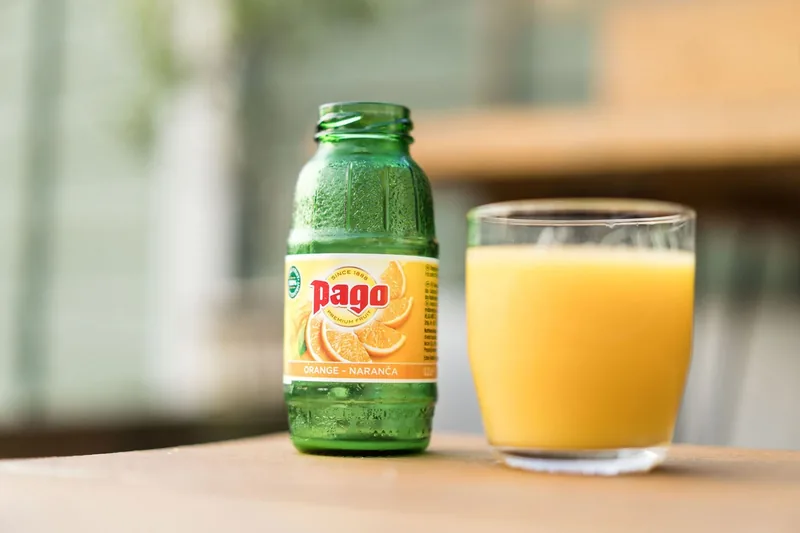
| Pago Orange | Orange juice from concentrate with pulp; 100% fruit content. |
| Pago Mango | Mango–passion fruit nectar; at least 30% fruit. The ingredient list specifies 18% mango purée, 12% passion fruit juice from concentrate and sugar. |
| Pago Strawberry | Strawberry drink; 40% total fruit content. The list includes strawberry purée, juices from several fruits and sugar. |
Total fruit is not the same as one fruit.
In the Mango example, mango and passion fruit contribute to the stated fruit content. In Strawberry, 40% refers to total fruit content; it does not mean the drink contains 40% strawberry. The ingredient list tells you which fruits make up the blend.
If a guest asks about a particular fruit or ingredient, check the bottle. A flavour name in the catalogue helps with ordering, but does not replace the full ingredient list.
From concentrate: what happens to the water?
Concentrating removes water; reconstitution restores it. Juice “not from concentrate” skips that step. The distinction concerns processing, not the addition of sugar.
The Orange example makes this tangible: Pago states both “from concentrate” and 100% fruit content. To choose by taste, compare products side by side. For a description on your menu, use the wording on your own bottle.
No added sugar does not mean sugar-free.
“No added sugars” concerns what was added during production. A drink can still contain sugars from fruit. “Sugar-free” concerns the total sugar content: drinks must contain no more than 0.5 grams of sugar per 100 ml.
For the amount, look at “of which sugars” in the nutrition table. Compare per 100 ml first, then calculate for the portion served. If a label states 8 grams per 100 ml, 200 ml contains 16 grams. This is an arithmetic example, not a nutrition claim for the Pago range.
“Alcohol-free” says nothing about sugar either. Describe a mocktail by its flavour and ingredients, and use a sugar claim only when you can support it for the complete drink.
A label check for your team.
When putting your menu together, photograph the front and back of the bottles you actually buy. Record the product name, ingredients and serving size for each item. That gives everyone the same information when ordering or answering guests.
Check again when packaging or formulation changes. Green Acres can help with questions about the Dutch range. The flavour pages below lead to the corresponding trade ordering pages.